
Health and Safety Consultants UK: The 2026 SME Guide to Choosing a Compliance Partner
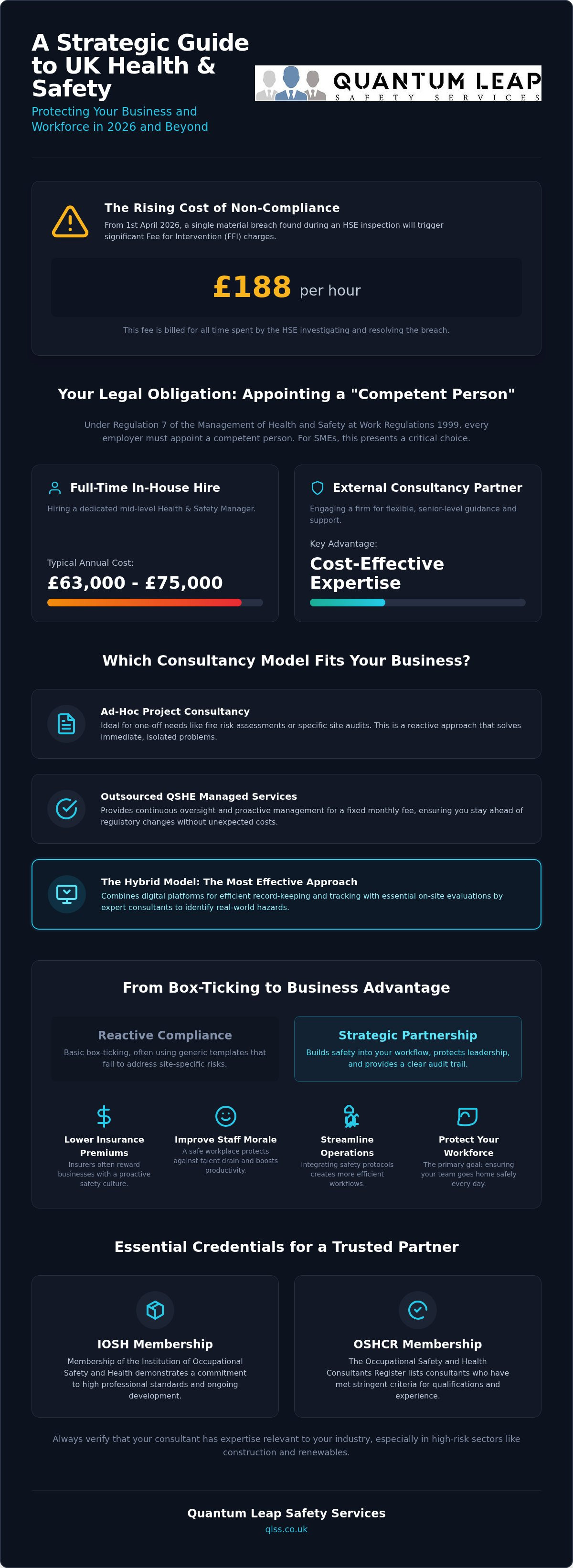
Did you know that as of April 2026, a single material breach found during an HSE inspection will cost your business £188 per hour in Fee for Intervention charges? For many small and medium enterprises, finding the right health and safety consultants uk has become a matter of operational survival rather than just a box-ticking exercise. It's not just about avoiding the financial sting; it's about ensuring your team goes home safely every single day.
We understand that the legal requirement to appoint a "competent person" often feels like another layer of complex red tape. You're likely tired of wasting hours on repetitive paperwork or worrying that your current safety protocols wouldn't stand up to scrutiny. You want a partner who provides clarity and stability, not more confusion. This guide is designed to help you navigate that choice with confidence.
By the end of this article, you'll know exactly how to select a consultant who protects your workforce whilst lowering your insurance premiums and streamlining your operations. We'll examine the latest 2026 benchmarks for the industry, the shift towards occupational health priorities, and the specific qualities that define a truly pragmatic compliance partner in today's market.
Table of Contents
The Role of Health and Safety Consultants in the UK Regulatory Landscape
Comparing Consultancy Models: Which Service Fits Your Business?
Key Specialisms: Finding a Consultant with Industry Expertise
Evaluating Your Partner: Essential Criteria for Your Shortlist
Strategic Safety Management with Quantum Leap Safety Services
The Role of Health and Safety Consultants in the UK Regulatory Landscape
Under Regulation 7 of the Management of Health and Safety at Work Regulations 1999, every employer is legally required to appoint a "competent person" to help them meet their safety obligations. For many SMEs, the challenge lies in finding this expertise without the significant overhead of a full-time hire. A mid-level health and safety manager can cost between £63,000 and £75,000 annually. Engaging health and safety consultants uk offers a pragmatic alternative, providing senior-level guidance on a flexible basis. This approach ensures you have a "safe pair of hands" to guide you through the complexities of the UK Regulatory Landscape without stretching your internal resources.
There's a vital distinction between a basic compliance officer and a strategic safety consultant. A compliance officer often focuses on reactive box-ticking, whereas a strategic partner builds safety into your operational workflow. Professional advice doesn't just protect your workforce; it protects your leadership. Directors can face personal liability, heavy fines, or even disqualification if they fail to demonstrate due diligence. A methodical consultancy partner helps you establish a clear audit trail, proving that you've fulfilled your corporate responsibilities and prioritised staff welfare.
Understanding Your Legal Duties as a UK Employer
The Health and Safety at Work etc. Act 1974 is the foundation of all workplace safety in Britain. It places a general duty on employers to ensure, so far as is reasonably practicable, the health, safety, and welfare of all employees. If your business employs five or more people, you must have a written health and safety policy. Whilst "off-the-shelf" templates are widely available online, they often fail to satisfy HSE inspectors. Generic documents don't reflect the specific risks of your site or the actual behaviour of your team. A consultant ensures your policy is a living document that truly reflects your business operations.
The Consequences of Non-Compliance in 2026
Financial penalties for safety failings have become more severe. As of 1 April 2026, the HSE Fee for Intervention (FFI) rate is £188 per hour. This fee applies the moment an inspector identifies a material breach, and you'll be billed for the time spent investigating and writing reports. Beyond these direct costs, workplace accidents damage staff morale and can lead to a talent drain. However, robust safety management offers a clear financial upside. Many insurers now offer lower employer liability premiums to businesses that can demonstrate a proactive safety culture and high standards of risk management.
Comparing Consultancy Models: Which Service Fits Your Business?
Choosing the right engagement model is as crucial as the technical advice itself. Whilst some health and safety consultants uk operate through remote call centres, a dedicated partnership offers a more personalised and thorough approach. Ad-hoc project consultancy remains a popular choice for businesses needing one-off fire risk assessments or specific site audits. These reactive engagements solve immediate problems but don't always address the long-term safety culture of an organisation.
The SME Advantage of Outsourced QSHE Managed Services
Many businesses now prefer outsourced QSHE managed services to maintain continuous oversight. This model provides predictable budgeting through fixed monthly fees, removing the risk of unexpected consultancy bills. You benefit from a "safe pair of hands" that stays ahead of regulatory changes, ensuring your documentation remains current. It's often more efficient than a single in-house hire because you tap into a collective pool of specialist knowledge rather than the limited experience of one individual.
Digital platforms have also gained traction in 2026 for organising safety documentation. They're excellent for tracking training dates and storing risk assessments. However, software alone can't spot a physical hazard on a shop floor. A hybrid model is the most effective way to manage risk today. It uses digital tools for record-keeping whilst relying on expert consultants to conduct on-site evaluations. This ensures that your safety systems work in practice, not just on a computer screen.
Project-Based Support for Specific Compliance Goals
Project-based work is best suited for defined milestones, such as ISO management system implementation or construction QSHE services. Clear deliverables and timelines are essential for these engagements. They allow you to tackle high-priority tasks, like achieving a specific accreditation, without committing to a long-term contract immediately. Often, these projects highlight areas where ongoing support would be beneficial, providing a natural transition into a managed service. When selecting health and safety consultants uk for these tasks, look for those who can demonstrate a track record in your specific sector. If you're unsure which model fits your current needs, exploring our Business Total Compliance Solutions is a sensible starting point.
Key Specialisms: Finding a Consultant with Industry Expertise
Whilst many health and safety consultants uk offer broad support, high-risk environments demand deep technical knowledge. A generalist might understand basic office ergonomics but struggle with the intricate permit-to-work systems required for high-voltage battery storage installations. Specialised expertise prevents the "one-size-fits-all" trap that often leads to gaps in your safety management system. By choosing a partner with industry-specific experience, you ensure your protocols are both legally compliant and operationally practical.
Renewable Energy Project Support
The UK's transition to net-zero has created a surge in demand for specialised QSHE advisors. Wind, solar, and battery storage projects present unique risks, from working at height in remote locations to managing the thermal runaway risks of large-scale battery infrastructure. Ensuring project success requires more than just a site visit; it requires a thorough health and safety audit for renewable projects before the first spade hits the ground. A dedicated advisor helps maintain environmental compliance whilst protecting the welfare of specialist contractors on-site.
Construction QSHE and CDM Compliance
Construction sites are dynamic environments where risks change daily. Total compliance for builders and developers hinges on robust CDM 2015 management. Regular site safety inspections and independent audits provide the objective oversight needed to keep projects on track. These assessments aren't just about finding faults; they're about verifying that sub-contractors meet your accreditation requirements, such as CHAS or SafeContractor. Having a seasoned professional from a reputable firm of health and safety consultants uk manage these checks allows your site managers to focus on delivery without compromising on welfare standards.
ISO Management Systems for SMEs
Strategic safety management often involves integrating health and safety with broader quality standards. Implementing ISO 45001 alongside ISO 9001 drives operational excellence by creating a unified framework for all business processes. This synergy reduces administrative duplication and ensures that safety protocols are as efficient as your production lines. For SMEs aiming to secure larger contracts, our ISO 9001 implementation services UK provide a methodical path to accreditation, positioning your brand as a reliable and high-quality partner.
Evaluating Your Partner: Essential Criteria for Your Shortlist
Selecting health and safety consultants uk requires looking beyond a basic website or a low price point. Credentials provide the necessary baseline for technical authority and legal protection. Membership in the Occupational Safety and Health Consultants Register (OSHCR) is a key indicator, as it verifies that a consultant has valid professional indemnity insurance and a recognised level of experience. You should also look for practitioners with memberships in IOSH or IIRSM. These organisations demand a commitment to continuous professional development, ensuring the advice you receive is based on the latest industry standards. Professional indemnity insurance is particularly vital; it ensures your business is protected if a consultant's advice is ever called into question during a legal dispute.
Technical knowledge alone isn't enough for a small business. You need a partner who understands the resource constraints and operational pace of an SME. A pragmatic consultant focuses on "common sense" safety that integrates with your workflow rather than creating unnecessary obstacles. Reviewing client testimonials and case studies can reveal if a consultant has successfully handled similar challenges in your sector. This evidence of proven results helps confirm they are a "safe pair of hands" for your specific organisational needs.
The "Competent Person" Interview
When interviewing a potential "competent person", ask about their specific experience in your industry sector. Enquire how they handle conflicting priorities, such as urgent production deadlines versus safety protocols. A good consultant will explain how they stay updated with changing UK legislation, such as the 2026 increases to HSE intervention fees. Their answers should reflect a desire to support your business goals whilst maintaining full compliance. Avoid those who rely on "box-ticking" exercises; instead, look for advisors who prioritise practical risk reduction that actually works on the shop floor or construction site.
Fire Safety and Specialist Assessments
Specialist assessments require specific qualifications that not all generalists possess. You must ensure your consultant is competent to conduct legally binding Fire Risk Assessments (FRAs). A generic safety audit is not a substitute for a dedicated fire safety review. Regular audits are necessary to reflect any changes in building layout or usage that could impact escape routes or fire suppression needs. Implementing comprehensive fire safety management plans ensures you meet the latest standards and protect your premises from catastrophic loss. If you are ready to secure your business with a pragmatic partner, explore our Business Total Compliance Solutions today.
Strategic Safety Management with Quantum Leap Safety Services
Quantum Leap Safety Services (QLSS) has operated as a dedicated partner for UK businesses since 2012. We understand that SMEs need more than just a list of faults; they need a methodical path to resolution. Our role as health and safety consultants uk is to provide that steady guidance, acting as your outsourced safety department. By choosing our QSHE Managed Services, you gain access to a broad range of technical expertise without the significant corporate overhead of a full-time in-house team. Our solutions are built to be cost-conscious and highly functional, ensuring that your compliance obligations are met without disrupting your core business activities.
We offer Business Total Compliance Solutions that cover every aspect of modern safety management. This includes everything from Training Management and Fire Safety Management to Occupational Health Services. Our approach is grounded in the belief that safety should be a seamless part of your operations, not a hurdle to overcome. Whether you're managing a complex renewable energy site or a busy construction project, we provide the specialised support needed to maintain a safer, more productive workplace culture. As experienced health and safety consultants uk, we ensure that your safety protocols remain resilient even as regulations evolve.
Why SMEs Choose Our Pragmatic Approach
Many organisations find themselves trapped in a cycle of reactive safety management, only addressing issues after an accident or an HSE visit. We help you move toward proactive risk management. This shift doesn't just prevent fines; it improves operational efficiency. You'll have direct access to seasoned professionals who prioritise your business goals. We focus on building long-term partnerships, taking the time to understand your specific site behaviour and resource constraints. This hands-on involvement ensures that the safety systems we implement are actually followed by your workforce and respect the practicalities of your industry.
Getting Started: Your Compliance Roadmap
The journey toward total compliance begins with a thorough audit and inspection. This initial process allows us to identify your current gaps and establish a clear baseline. From there, we develop a bespoke safety package tailored to your industry and scale. As your business grows, your safety support can grow with it, ensuring you're never under-protected or over-paying for unnecessary services. If you're looking for a reliable expert to secure your workforce and protect your directors, explore our Business Total Compliance Solutions today for a comprehensive compliance review and discover how we can streamline your safety obligations.
Securing Your Business Future with Expert Compliance
Choosing the right health and safety consultants uk is a strategic decision that impacts your operational efficiency as much as your legal standing. Moving away from reactive box-ticking towards a proactive managed service ensures your business remains resilient against shifting regulations and rising HSE intervention fees. Whether you're navigating the complexities of a renewable energy project or managing a busy construction site, having a partner who understands your specific industry nuances is essential.
Quantum Leap Safety Services has been a "safe pair of hands" for UK SMEs since 2012. We pride ourselves on a pragmatic, common-sense approach that balances technical authority with the practical resource constraints of modern enterprises. Our specialist expertise in high-risk sectors, including renewables and construction QSHE, allows us to provide methodical, cost-conscious solutions that protect your workforce and your directors.
Don't leave your compliance to chance. Take the first step towards a safer, more productive workplace today. Contact Quantum Leap Safety Services for a pragmatic compliance review and ensure your business is fully protected for the years ahead.
Frequently Asked Questions
What is the legal requirement for health and safety consultants in the UK?
Under Regulation 7 of the Management of Health and Safety at Work Regulations 1999, every employer must appoint a "competent person" to assist with safety duties. This can be an internal employee or an external specialist. For many businesses, hiring health and safety consultants uk is the most pragmatic way to access senior-level expertise without the overhead of a full-time manager, ensuring you meet your legal obligations effectively.
How much do health and safety consultants typically charge UK SMEs?
Fees are generally structured as either fixed-price project costs or ongoing monthly managed service retainers. Whilst specific rates depend on your industry risk level and business size, a retained service often provides better value than reactive ad-hoc support. Choosing a retainer model allows for predictable budgeting and ensures continuous access to competent advice, helping you avoid the high hourly costs associated with HSE intervention fees during inspections.
Do I really need a consultant if I only have a small team?
Safety legislation applies to every business, regardless of head count. If you employ five or more people, you're legally required to have a written health and safety policy and documented risk assessments. Small teams often lack the internal resources to keep up with changing regulations. A consultant acts as a "safe pair of hands", providing the methodical oversight needed to protect your workforce and prevent costly legal action or fines.
What is the difference between an audit and a risk assessment?
A risk assessment focuses on identifying specific hazards in your workplace and implementing controls to prevent accidents. An audit is a broader, systematic review of your entire safety management system. It verifies that your policies are being followed correctly and remain effective. Both are essential; risk assessments manage daily shop-floor hazards, whilst audits ensure your overall compliance framework is robust and stands up to external scrutiny.
Can a health and safety consultant help with CHAS or SafeContractor accreditations?
Professional consultants provide the administrative and technical support required to achieve industry accreditations like CHAS, SafeContractor, or Constructionline. They help you organise your safety documentation and evidence to meet the specific standards of these schemes. This support is vital for SMEs looking to win new contracts, as many larger organisations and public sector bodies require these certifications as a mandatory part of their tendering process.
How often should a health and safety consultant visit my business premises?
The frequency of site visits depends on your specific operational risks and industry sector. High-risk environments, such as construction sites or renewable energy projects, require more frequent inspections to manage dynamic hazards. For lower-risk office environments, an annual audit might be sufficient. A managed service provider will typically establish a scheduled programme of visits that aligns with your business needs and ensures your safety standards remain consistent.
What should I look for in a health and safety consultant’s professional credentials?
You should verify that your consultant is listed on the Occupational Safety and Health Consultants Register (OSHCR). This register confirms they have valid professional indemnity insurance and recognised qualifications. Look for memberships in professional bodies like IOSH or IIRSM. These credentials prove the consultant is committed to continuous professional development and has the technical authority to provide reliable advice that complies with the latest UK safety legislation.
Is fire safety management included in general health and safety consultancy?
Fire safety is often a specialist service that can be integrated into a broader compliance package. You must ensure your consultant is specifically qualified to conduct legally binding Fire Risk Assessments. Whilst many health and safety consultants uk provide general guidance, fire safety management requires a detailed understanding of building regulations and escape route requirements. It's often best managed as part of a total compliance solution to ensure no gaps exist.


Comments