
Small Business Fire Safety Compliance: The 2026 UK SME Guide
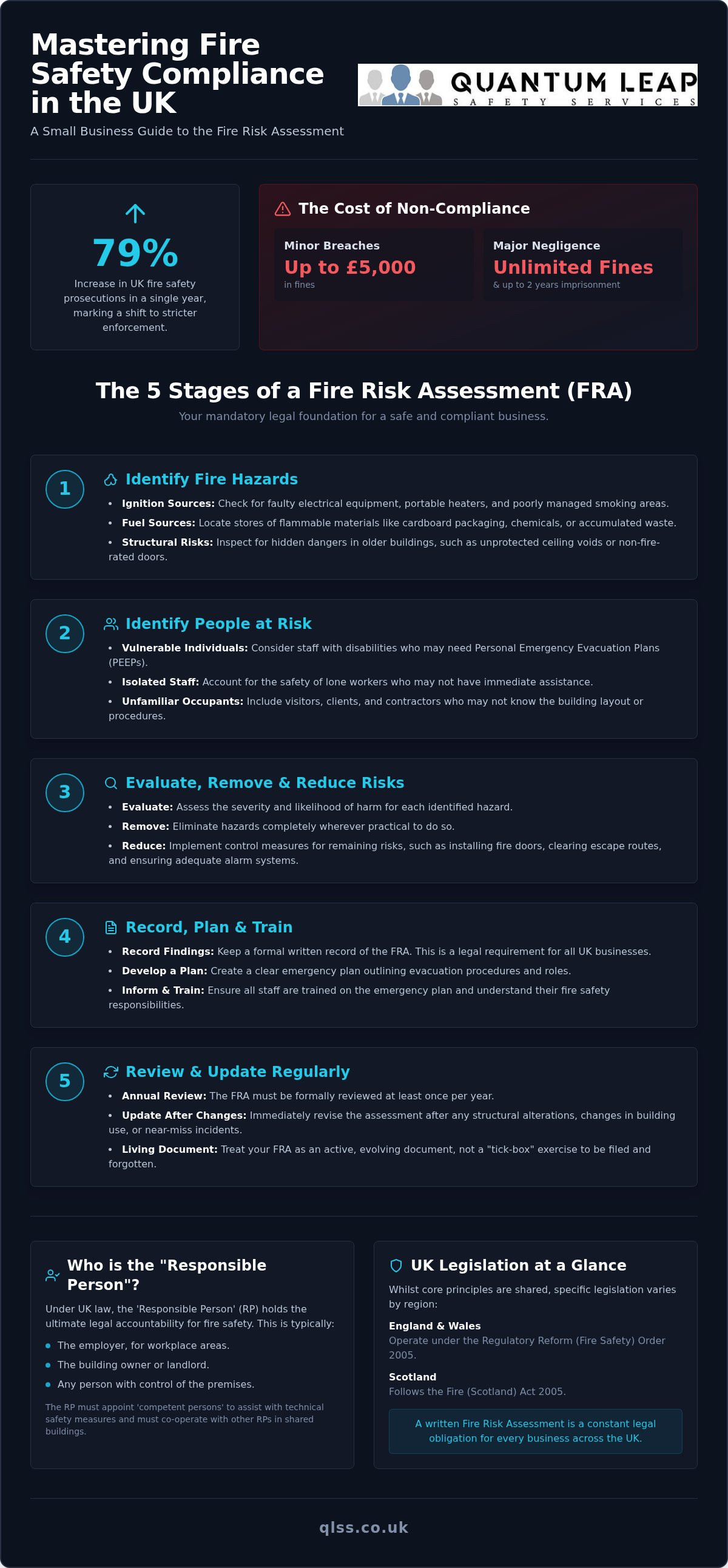
Did you know that fire safety prosecutions in the UK recently increased by 79% in a single year? This shift marks a move away from simple guidance toward a culture of strict enforcement. For many, the fear of unlimited fines or even imprisonment is a constant weight, especially whilst trying to decipher the differences in legislation between England and Scotland. You likely feel that managing small business fire safety compliance is a complex, expensive burden that distracts from your core operations.
We understand that your priority is protecting your staff and your livelihood without overstretching your budget. This guide offers a pragmatic, step-by-step roadmap designed to help you master UK fire safety law with confidence. We will examine the specific duties of the "Responsible Person," provide clarity on current British Standards for equipment, and outline how to maintain a compliant safety culture throughout 2026. By the end of this article, you will have a clear strategy to secure your business assets and ensure your premises remain a safe pair of hands for everyone involved.
Table of Contents
Understanding Your Legal Duties as a Small Business Owner
The legal framework for small business fire safety compliance is no longer a static set of rules. In 2026, the focus has shifted toward rigorous enforcement and accountability. The primary legislation remains the Regulatory Reform (Fire Safety) Order 2005, but its scope has been significantly clarified by the Fire Safety Act 2021 and subsequent updates in 2023 and 2024. These changes mean that small business owners must provide evidence of competence rather than simply ticking boxes. Failure to meet these standards carries severe consequences. Minor breaches may result in fines of up to £5,000, whilst major negligence can lead to unlimited fines and custodial sentences of up to two years.
The Role of the Responsible Person
Under the 2005 Order, the "Responsible Person" (RP) is the individual or entity legally accountable for fire safety, usually the employer, building owner, or landlord. It's the RP's duty to ensure the premises are safe for all occupants. In shared commercial buildings, multiple RPs have a legal duty to co-operate and co-ordinate their safety efforts to ensure a seamless evacuation strategy. Whilst the RP holds ultimate accountability, they are required to appoint "competent persons" to assist with technical safety measures, such as maintenance and risk assessments. This ensures that expert knowledge guides your small business fire safety compliance strategy.
Legislation Differences Across the UK
Whilst the core principles of safety are universal, the specific acts vary by region. England and Wales operate under the Fire Safety Order 2005, whereas Scotland follows the Fire (Scotland) Act 2005. Despite these regional distinctions, the fundamental requirement for a written fire risk assessment remains a constant legal obligation for every business across the UK.
The enforcement landscape in 2026 also reflects a change in how Fire and Rescue Services respond to automatic alarm activations. Many services now require physical confirmation of a fire before attending commercial premises to reduce "unwanted fire signals." This shift places a greater burden on the RP to ensure that alarm systems are reliable and that staff are trained to investigate activations safely. With nearly 3,000 formal enforcement notices issued annually in England alone, the importance of a proactive safety culture has never been higher. It's about protecting your livelihood through methodical, professional management.
The Fire Risk Assessment (FRA): Your Compliance Foundation
Every UK enterprise, regardless of its size or employee count, is legally required to maintain a written record of its fire safety measures. The fire risk assessment for businesses serves as the foundational document for your entire safety strategy. It's not a static "tick-box" exercise but a living document that requires an annual review or an immediate update following any structural changes or changes in building use. This proactive approach ensures that your small business fire safety compliance remains robust as your company evolves.
A professional FRA follows five logical stages: identifying hazards, identifying people at risk, evaluating and reducing those risks, recording findings, and regularly reviewing the plan. Following official government guidance on fire risk assessments is a valid starting point, but the complexity of modern commercial environments often necessitates a more detailed, expert-led approach to ensure no hidden vulnerabilities are missed. If you're unsure about your current status, our team at Quantum Leap Safety Services can provide a fixed-price assessment to establish your compliance baseline.
Identifying Hazards and People at Risk
The first step involves a methodical walk-through to spot potential ignition sources, such as faulty electrical equipment, portable heaters, or poorly managed smoking areas. These must be cross-referenced with fuel sources like cardboard packaging, chemical stores, or accumulated waste. You must also consider the safety of specific individuals. This includes staff with disabilities who may require Personal Emergency Evacuation Plans (PEEPs), as well as lone workers or visitors unfamiliar with the building layout. In older commercial premises, you should pay particular attention to structural fire spread risks, such as unprotected ceiling voids or non-fire-rated doors.
Evaluate, Remove, and Reduce Risk
Once hazards are identified, you must evaluate the likelihood of a fire starting and the potential consequences for occupants. Practical risk reduction often includes simple, cost-effective measures like regular PAT testing for appliances or improving waste management protocols to keep exit routes clear. When weighing up the fire risk assessment cost, it's vital to compare this modest investment against the catastrophic financial and legal impact of a fire. Maintaining an accurate record of these findings is essential for demonstrating your commitment to safety during an inspection and protecting your business assets over the long term.
Essential Fire Safety Equipment and Maintenance Standards
Physical safety assets represent the frontline of your defence, but their presence alone doesn't guarantee small business fire safety compliance. For these tools to be effective, they must be part of a wider, managed system. Mandatory assets for most UK SMEs include fire detection systems, emergency lighting, portable extinguishers, and clear safety signage. These aren't "fit and forget" items; the law requires regular testing and maintenance by competent engineers to ensure they function correctly when needed. Following London Fire Brigade's workplace safety guidance provides a reliable framework for understanding how these physical components interact with your daily operations.
Fire Detection and Warning Systems
The type of system you require depends on your specific premises. A simple manual "break glass" system might suffice for small, open-plan offices, but larger or multi-room buildings often necessitate automatic detection. Under BS 5839, these systems require weekly testing by a designated staff member and professional servicing every six months. In 2026, we're seeing a significant trend toward integrating smart monitoring technology. These systems provide real-time alerts to your smartphone and help reduce the "unwanted fire signals" that now lead to restricted responses from many Fire and Rescue Services.
Extinguishers and Fire Suppression
Extinguishers must be matched to the specific risks present in your workplace. A standard office might rely on Water or Foam for general combustibles and CO2 for electrical risks, whilst a workshop might require Powder or specialised units for lithium-ion battery fires. Beyond the annual service, you must account for the 10-year discharge and overhaul rule, which involves a comprehensive internal inspection or replacement. Don't overlook the importance of fire blankets in kitchenettes or staff breakrooms; they're an essential, low-maintenance tool for tackling small cooking fires before they escalate.
All maintenance activities, equipment tests, and staff fire drills must be recorded in a dedicated Fire Safety Logbook. This document is the first thing an enforcement officer will ask to see during an audit. It's vital to remember that even the most advanced equipment is useless without robust fire safety management plans. Equipment provides the means to detect and fight fire, but your procedural management ensures that people know how to use those tools and evacuate safely. Balancing these physical and procedural elements is what creates a truly resilient business environment.
A 5-Step Roadmap to Achieving Total Compliance in 2026
Achieving small business fire safety compliance requires a methodical approach that moves from legal theory to practical application. Step 1 involves appointing your "competent person." Whilst you can manage this internally if your risks are low, many SMEs find that partnering with an external consultant provides the necessary technical authority and peace of mind. Step 2 is the completion of your Fire Risk Assessment to identify your unique baseline. Step 3 focuses on implementing the physical hardware and procedural safeguards identified in that assessment, ensuring all systems meet current British Standards. This structured progression ensures no legal gaps are left exposed as you build your safety framework.
Staff Training and Fire Wardens
Step 4 in your roadmap is the human element: training. Legal requirements mandate that every employee receives a basic fire safety induction on their first day of work. Beyond this general awareness, you must appoint and train specific Fire Wardens. The ratio of wardens depends on your specific risk level and staff headcount, but a common benchmark for a low-risk office is one warden for every 20 employees. It's vital to organise effective fire drills that go beyond a simple walk to the car park. Realistic drills might involve simulating a blocked exit to test if staff can identify and use alternative escape routes under pressure.
Emergency Procedures and Evacuation Plans
Your evacuation strategy must be robust and inclusive. Clear, unobstructed escape routes and final exit doors are non-negotiable requirements that must be checked daily. You must also account for individuals with specific needs, such as mobility or sensory impairments, through Personal Emergency Evacuation Plans (PEEPs). A fire drill is a simulated emergency event designed to test the effectiveness of evacuation procedures and ensure all occupants can exit the premises safely, with a recommended frequency of at least once per year. These procedures must be documented clearly in your fire logbook to provide evidence of your proactive safety culture.
Step 5 is the establishment of a robust review cycle. Compliance isn't a one-off event; your records and procedures must be updated annually or whenever your business grows, moves, or undergoes structural changes. This ensures your safety measures remain relevant and effective over the long term. If you find the burden of managing these steps overwhelming, our Business Total Compliance Solutions can handle the entire roadmap for you, acting as your dedicated safety partner and a safe pair of hands for your enterprise.
Why Managed Fire Safety Services Provide the Ultimate Safeguard
Many business owners attempt a DIY approach to small business fire safety compliance to save on upfront costs. However, the risk of a single documentation error can be catastrophic. Whilst some believe insurance is the ultimate safety net, many policies are effectively voided if the insured party cannot prove they fulfilled their legal obligations under the Fire Safety Order. A professional audit provides the verifiable evidence of due diligence that insurers and enforcement authorities require. Relying on a managed service ensures that your safety measures are technically sound and legally defensible in the event of an incident.
The Managed Service Advantage
Transitioning to a managed service moves your business from reactive "firefighting" to proactive safety management. An outsourced safety officer provides continuous access to competent advice, ensuring that your documentation remains current as legislative changes occur. In 2026, where enforcement is increasingly rigorous, having a professional partner ensures that your risk assessments and maintenance logs are never out of date. This creates a "safe pair of hands" environment, allowing you to focus on growth whilst we manage the complexities of corporate responsibility. It's a pragmatic solution for enterprises that require expert oversight without the overhead of an in-house safety officer.
Integrating Fire Safety into Total Compliance
Fire safety doesn't exist in a vacuum; it's a critical component of your broader health and safety framework. By integrating fire safety into a total compliance solution, you benefit from a single point of contact for Fire, Health, Safety, and ISO management systems. This holistic approach ensures consistency across all safety protocols and reduces the administrative burden on your internal team. It also ensures that training management and audit schedules are synchronised, providing a clear overview of your compliance status at any given time.
Quantum Leap Safety Services specialises in providing these SME-tailored managed services. We act as a dedicated partner that organises all your QSHE requirements under one professional banner, ensuring your small business fire safety compliance is handled with the precision and care it deserves. By consolidating your safety needs, you achieve operational efficiency and long-term stability.
Securing Your Enterprise for a Compliant Future
Maintaining small business fire safety compliance is no longer a matter of simple paperwork; it's a fundamental pillar of operational resilience. Throughout this guide, we've established that the "Responsible Person" must move beyond reactive measures to a proactive, methodical management system. By conducting a thorough Fire Risk Assessment and ensuring your staff are trained to handle modern fire risks, you protect both your team and your livelihood from the severe legal consequences of negligence.
With over 14 years of expert safety consultancy and extensive national coverage across the UK and EU, Quantum Leap Safety Services provides the stability your business needs. We specialise in fixed-price SME compliance packages that remove the guesswork from your safety obligations. Don't leave your assets to chance or risk the complexities of DIY safety management.
Get a Professional Fire Risk Assessment Quote to ensure your premises are a safe pair of hands. Taking these steps today provides the long-term peace of mind you need to focus on growing your business with confidence.
Frequently Asked Questions
Do I really need a written fire risk assessment if I only have two employees?
Yes, every business must now have a written fire risk assessment. Previous exemptions for businesses with fewer than five employees were removed in October 2023. This means that even if you only have two staff members, a written record is a legal necessity. Failing to document your findings leaves you open to enforcement action. A written assessment provides a clear safety baseline and demonstrates your commitment to small business fire safety compliance during an inspection.
How often should a small business review its fire safety policy?
You should review your fire safety policy at least once every 12 months to ensure it remains accurate. However, an immediate review is required if there are significant changes to your premises, such as structural alterations or a change in building use. If you introduce new hazardous materials or significantly increase your staff headcount, your existing policy may no longer be fit for purpose. Regular reviews help you maintain a proactive safety culture and avoid technical obsolescence.
Can I do my own fire risk assessment or do I need a professional?
You are legally permitted to conduct your own assessment if you are a "competent person" with the necessary knowledge and experience. For very simple, low-risk environments, a DIY approach might suffice. However, many business owners prefer a professional assessment to ensure they haven't overlooked complex risks like structural fire spread or specific battery hazards. Professionals provide an objective, expert perspective that helps guarantee total small business fire safety compliance and reduces the risk of legal errors.
What are the main fire safety changes for UK businesses in 2026?
The primary shift in 2026 is the move toward more rigorous enforcement of existing legislation rather than entirely new laws. Fire and Rescue Services are now focusing heavily on the "Responsible Person" demonstrating tangible evidence of competence. There is also a significant trend regarding automatic alarm responses, with many services requiring physical confirmation of a fire before attending. Documentation requirements have become stricter, with inspectors expecting comprehensive logs of all maintenance, training, and drills to be readily available.
How many fire wardens does a small office actually need?
The number of fire wardens required depends on your specific risk level, the size of your premises, and your staff layout. For a typical low-risk small office, a common guideline is one warden for every 20 employees. However, you must ensure that you have adequate coverage during holidays, sickness, or shift patterns. If your office is split across multiple floors, you generally need at least one warden per floor to manage a coordinated and safe evacuation process.
What happens if my business fails a fire service inspection?
If an inspector identifies breaches, they may issue an informal notice for minor issues or a formal enforcement notice for more serious failures. An enforcement notice outlines the specific improvements required and provides a deadline for completion. In cases of extreme danger, a prohibition notice can be issued, which restricts or closes access to your premises immediately. Persistent non-compliance or severe negligence can lead to unlimited fines and custodial sentences for the "Responsible Person" involved.
Is fire safety training for staff a legal requirement every year?
Fire safety training is a mandatory legal requirement for all new staff during their induction. Whilst the law does not explicitly state "every year," it dictates that training must be repeated periodically to remain effective. Most safety professionals recommend an annual refresher to ensure staff remember evacuation routes and alarm procedures. You must also provide additional training whenever there are changes to your emergency plan or if new fire hazards are introduced to the workplace.
Will my business insurance be void if I do not have a valid fire risk assessment?
Yes, failing to maintain a valid fire risk assessment can lead to your insurance claim being rejected. Most commercial insurance policies include a clause requiring the policyholder to comply with all relevant statutory regulations. If a fire occurs and you cannot prove you met your legal obligations under the Fire Safety Order, your insurer may argue that you were negligent. This leaves your business liable for the full cost of property damage and any third-party compensation claims.


Comments