
UK Site Safety Inspections: 2026 Compliance Guide
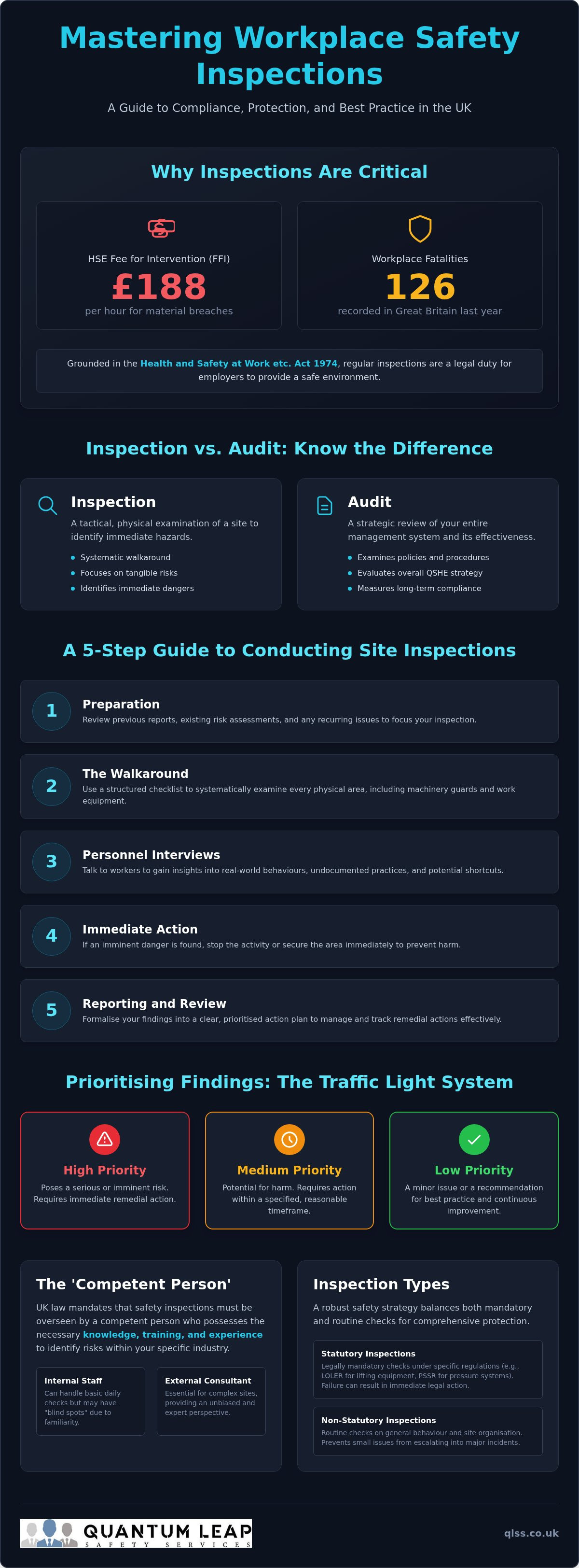
Did you know that as of April 2026, the Health and Safety Executive (HSE) charges a Fee for Intervention (FFI) rate of £188 per hour for businesses found in material breach of safety laws? This significant financial pressure, coupled with the 126 workplace fatalities recorded in Great Britain last year, highlights why professional workplace safety inspection services are vital for modern operations. It is easy to feel overwhelmed by the volume of paperwork or the fear that a missed detail might lead to a costly fine or, worse, a preventable accident on your site.
We understand that maintaining total compliance can feel like a moving target, especially when you are balancing operational efficiency with complex regulatory demands. This guide promises to help you master the essential steps of safety inspections to protect your workforce and ensure your business remains on the right side of the law. We will provide a clear, repeatable process to help you identify hazards, manage documentation effectively, and prepare your business for successful CHAS or ISO accreditation with absolute confidence.
Table of Contents
Understanding Workplace Safety Inspection Services: Legal Duties and Definitions
A Step-by-Step Guide to Conducting Site Safety Inspections in the UK
Internal vs. Professional Safety Inspections: Choosing the Right Approach
Hazard Identification and Reporting: Turning Findings into Action
Maximising Compliance: Integrating Inspections into Your QSHE Strategy
Understanding Workplace Safety Inspection Services: Legal Duties and Definitions
A workplace safety inspection is a formal, systematic examination of a physical site. Unlike a broad review, it focuses on identifying immediate hazards that could cause harm. These inspections are grounded in Occupational safety and health principles, which prioritise the prevention of injury through proactive monitoring. In 2026, the Health and Safety Executive (HSE) has increased its focus on SMEs, as these businesses often lack a dedicated in-house safety officer. With the Fee for Intervention (FFI) rate standing at £188 per hour for material breaches, the financial risk of neglecting these checks is substantial.
The legal foundation for these activities is the Health and Safety at Work etc. Act 1974. This legislation requires employers to provide a safe environment; regular inspections are the primary tool for meeting this duty. It's vital to distinguish between an audit and an inspection. An audit is a strategic review of your entire management system, whereas an inspection is a tactical walkaround. Professional workplace safety inspection services provide the technical detail needed to catch risks that internal teams might overlook due to familiarity with the site.
The Role of the 'Competent Person'
UK law mandates that safety inspections must be overseen by a competent person. This individual doesn't just need a title; they must possess the specific knowledge, training, and experience required to identify risks in your specific industry. Whilst an internal staff member can often handle basic daily checks, complex sites or high-risk environments usually require an external consultant. This ensures an unbiased perspective and provides a "safe pair of hands" for navigating intricate legal requirements without the blind spots that come with daily site presence.
Statutory vs. Non-Statutory Inspections
Your compliance strategy should balance statutory and non-statutory checks. Statutory inspections are mandatory under specific regulations, such as LOLER for lifting equipment or PSSR for pressure systems. Failing to perform these can result in immediate legal action. Non-statutory inspections, however, are just as important for long-term stability. These routine checks monitor general behaviour and site organisation, preventing small issues from escalating into major incidents. Integrating these regular walkarounds into outsourced QSHE managed services helps create a repeatable compliance cycle that protects both your workforce and your reputation.
A Step-by-Step Guide to Conducting Site Safety Inspections in the UK
Execution is where compliance meets reality. To conduct a thorough inspection, you must follow a methodical process that leaves no room for oversight. Many SMEs utilise professional workplace safety inspection services to ensure this process is handled correctly from the start. Every inspection should begin with Step 1: Preparation. This involves reviewing previous reports and existing risk assessments to identify recurring issues or areas that were flagged for improvement during the last site visit.
Step 2: The Walkaround is the core of the process. Use a structured checklist to ensure you examine every physical area of the site systematically. This includes checking that machinery guards are in place and that work equipment meets the UK regulations for equipment inspection. Step 3: Personnel Interviews are equally vital. Don't just look at the equipment; talk to the workers using it. They can provide insights into real-world behaviours and potential shortcuts that might not be visible during a silent walkaround.
If you encounter a hazard that poses an imminent danger, you must move to Step 4: Immediate Action. Address these risks on the spot by stopping the activity or securing the area immediately. Finally, Step 5: Reporting and Review involves formalising your findings into a prioritised action plan. If you find this process daunting, our team provides expert audit and inspection services to handle the heavy lifting for you.
Planning Your Inspection Frequency
Determining how often to inspect depends on your specific risk profile. A high-turnover construction site requires daily informal walkarounds and formal weekly checks. Conversely, a low-risk warehouse might only need monthly formal inspections. You should adjust your frequency based on accident trends or near-miss reports. If incidents are rising, your inspection schedule should become more rigorous to identify the root cause before a material breach occurs and an HSE inspector arrives.
Special Considerations for Construction and Renewables
High-risk sectors demand specialised focus during every site visit. In construction, your inspections must prioritise falls from height and silica dust control, as these remain leading causes of ill health and fatalities. For renewable energy projects, focus on high-voltage infrastructure and the safety of workers in remote locations. These nuances are detailed further in our 2026 health and safety guide for construction sites, which provides a deeper dive into sector-specific compliance requirements.
Internal vs. Professional Safety Inspections: Choosing the Right Approach
Deciding who performs your site checks is a strategic choice for any business owner. Internal staff are often the first line of defence; they understand the daily rhythm of the site and can spot changes in real-time. However, relying solely on internal teams introduces the 'Blind Spot' phenomenon. This occurs when staff become so familiar with their environment that they stop noticing incremental risks. A blocked fire exit or a slightly damaged rack becomes part of the background scenery rather than a priority hazard. Over time, this familiarity can lead to complacency and increased risk.
Professional workplace safety inspection services provide the fresh eyes and technical authority needed to break this cycle. External consultants offer total impartiality, which means they aren't influenced by internal site politics or production deadlines. Their reports provide a level of legal robustness that is difficult to achieve with internal logs alone. From a financial perspective, the investment in an expert review is easily justified. When you consider that the HSE Fee for Intervention (FFI) rate is £188 per hour for 2026, the cost of a professional inspection is a fraction of the potential fines resulting from a material breach.
When to Call in a Professional Consultant
Specific triggers should prompt you to seek external expertise. If your site experiences a serious incident or a near miss that could have resulted in a fatality, an immediate independent review is vital to identify systemic failures. Professional support is also essential when you are preparing for major accreditations like CHAS, Alcumus SafeContractor, or ISO 45001. Additionally, if your business is expanding into new, high-risk sectors like offshore wind or large-scale civil engineering, the technical safety requirements often exceed the capacity of non-specialist internal staff.
The Managed Service Hybrid Approach
The most effective strategy for many UK SMEs is a hybrid model. This involves your internal team managing daily logs and basic site discipline, whilst a professional partner conducts quarterly or bi-annual audits. This approach ensures total peace of mind by combining local knowledge with high-level technical oversight. By using a retainer-based managed service, you gain continuous access to competent advice whenever a safety challenge arises. These professional reports aren't just for compliance; they serve as documented evidence of proactive safety management, which is often required by insurers to maintain favourable premiums.
Hazard Identification and Reporting: Turning Findings into Action
Identifying a hazard is only half the battle. The real value of a site visit lies in how you categorise and communicate those findings to drive meaningful change. During an inspection, hazards typically fall into four distinct categories: physical (such as falls or machinery risks), chemical (hazardous substances), biological (waste or bacteria), and ergonomic (poor workstation setup or lifting techniques). Professional workplace safety inspection services use these classifications to ensure every risk is accounted for and nothing is dismissed as a minor inconvenience.
To manage these findings effectively, we recommend a "traffic light" prioritisation system. Red indicates an immediate danger that requires work to stop until the issue is rectified. Amber represents a significant risk that needs addressing within a set timeframe, whilst green identifies low-level issues that require monitoring or minor adjustments. For this system to work, your report must be robust. It should include clear photographs, precise locations, and a named individual responsible for the fix. Closing the loop by verifying and documenting that the action has been completed is the most critical part of the entire process.
Common Hazards Found During UK Site Inspections
Even well-run sites often struggle with recurring issues that external eyes spot instantly. Inadequate fire safety management, such as blocked fire exits or faulty alarms, remains a primary concern for inspectors. Poor housekeeping is another frequent finding, leading to avoidable slips and trips amongst the workforce. We also see frequent electrical safety failures, ranging from out-of-date PAT testing to damaged cables left in high-traffic areas. Identifying these common pitfalls early prevents them from becoming entries in an accident book or triggers for a regulatory visit.
Developing a Remedial Action Plan
Once hazards are identified, you need a structured plan to eliminate them. Use SMART targets to ensure every repair is specific, measurable, achievable, relevant, and time-bound. Assigning clear ownership is vital; if a task belongs to "the team," it often belongs to no one. By 2026, many businesses have moved away from traditional paper-based logs in favour of digital inspection software, which allows for real-time tracking of remedial actions and easier data retrieval. If you need support in building a functional reporting framework, you can view our comprehensive audit and inspection services to see how we streamline this process for our partners.
Maximising Compliance: Integrating Inspections into Your QSHE Strategy
Safety inspections shouldn't exist in a vacuum. To extract the most value from your workplace safety inspection services, you must integrate findings into your broader Quality, Safety, Health, and Environmental (QSHE) management system. This transforms a simple site check into a strategic data point that informs your risk register and future training needs. By treating inspections as part of a continuous improvement loop, you demonstrate a level of operational maturity that insurers value. For many UK SMEs, providing documented evidence of regular, professional site reviews is a powerful lever for negotiating reduced insurance premiums, as it proves you're actively mitigating risk rather than just reacting to incidents.
Transitioning from reactive "tick-box" checks to a managed safety culture is the ultimate goal. This shift ensures that compliance becomes a natural part of your daily operations rather than a stressful event preceding an audit. When safety is woven into your strategy, you protect your workforce whilst simultaneously building a more resilient, profitable enterprise. Professional workplace safety inspection services provide the baseline data needed to make this transition, offering the expert oversight required to maintain high standards across multiple sites or complex projects.
Preparing for ISO and SSIP Accreditations
Consistency is the primary trait CHAS and Alcumus SafeContractor assessors look for during an application. They don't just want to see a single report; they want to see a history of consistent inspections that show you've identified and closed out hazards over time. Organising your documentation into a clear, accessible format makes the accreditation process seamless and reduces the administrative burden on your team. If you're looking to strengthen your wider management systems, read our SME guide to ISO 9001 implementation to understand how quality standards support overall business safety.
The Future of Safety Inspections
The landscape of site safety is evolving rapidly in 2026. Drone-based inspections are now standard for high-risk infrastructure, such as offshore wind farms and large-scale solar projects, allowing for detailed visual checks without putting staff at height. We're also seeing the rise of real-time reporting and AI-assisted hazard recognition, which can flag potential risks before they lead to an accident. Quantum Leap Safety Services stays at the forefront of these technological shifts, ensuring our partners benefit from the most efficient and accurate inspection methodologies available. We remain your "safe pair of hands" in an increasingly digital regulatory environment.
Securing Your Business Future Through Proactive Safety
Effective safety management isn't about ticking boxes to satisfy a regulator; it's about building a resilient foundation for your company's growth. By mastering a structured inspection process and addressing hazards with a clear prioritisation system, you protect your workforce from harm whilst insulating your business from the financial impact of HSE fines. Professional workplace safety inspection services act as a vital safeguard, providing the technical expertise needed to identify the operational blind spots that often lead to material breaches.
Quantum Leap Safety Services provides the steady guidance required to navigate these complexities. We offer managed QSHE services tailored specifically for SMEs, with deep expertise in fire safety management and ISO management systems. Whether you're managing renewable energy projects or complex construction sites, our national UK coverage ensures you have a dedicated partner on the ground. Book a professional site safety inspection with Quantum Leap Safety Services today. Taking these steps today ensures your business remains a safe, stable, and reputable leader in your industry.
Frequently Asked Questions
What is the difference between a safety audit and a safety inspection?
A safety inspection is a tactical, physical walkaround focused on identifying immediate hazards on a site. It is a snapshot of the current environment. A safety audit is a broader, strategic review of your entire management system and documentation. Whilst an inspection checks if a guard is on a machine, an audit checks if you have a system to ensure guards are maintained and staff are trained to use them correctly.
How often should site safety inspections be carried out in the UK?
Inspection frequency depends on the specific risk level and nature of your operations. High-risk environments, such as construction sites or renewable energy projects, often require weekly formal inspections and daily informal walkarounds. Lower-risk settings, such as offices, might only require formal checks every three to six months. You should adjust this schedule based on incident trends, near-miss reports, or significant changes to your workforce or equipment to maintain safety standards.
Who is legally allowed to conduct a workplace safety inspection?
Any competent person with the necessary knowledge, training, and experience is legally allowed to conduct an inspection. This can be an internal staff member for routine checks, but complex or high-risk tasks often require external workplace safety inspection services. Using a consultant ensures an unbiased perspective and helps identify blind spots that daily staff might overlook. The law prioritises the ability to recognise hazards over specific job titles or seniority.
Do I need a written report for every safety inspection I perform?
You should maintain a written record for every formal safety inspection performed. Whilst daily informal checks might only require a simple log entry, formal weekly or monthly inspections need a detailed report to serve as evidence of your proactive safety management. These records are vital during HSE visits or when applying for industry accreditations. They must include the date, findings, and a clear record of when remedial actions were completed.
What are the most common things HSE inspectors look for during a visit?
HSE inspectors primarily look for material breaches of health and safety law, such as inadequate machinery guarding or poor fire safety management. They will examine your risk assessments, training records, and evidence of previous inspections to ensure you're managing risks effectively. In 2026, there is a heightened focus on occupational health, including mental health and musculoskeletal risks, alongside traditional physical hazards like falls from height or struck-by-object incidents.
Can a safety inspection help my business get CHAS or SafeContractor accreditation?
Regular site inspections are a fundamental requirement for achieving CHAS, Alcumus SafeContractor, or ISO 45001 accreditations. Assessors look for a documented history of consistent monitoring and hazard resolution rather than a one-off report. Professional workplace safety inspection services help you organise this documentation, making the application process seamless. Demonstrating a proactive safety culture through these records significantly increases your chances of a successful accreditation on the first attempt and maintains your professional reputation.
What happens if a safety inspection identifies a major hazard that cannot be fixed immediately?
If a major hazard is identified that cannot be fixed immediately, you must isolate the area or stop the specific activity to prevent injury. Implement interim controls, such as temporary barriers or warning signs, whilst a permanent solution is organised. The traffic light system helps here; a red hazard requires an immediate halt to work. You should document these interim measures and set a clear, time-bound deadline for the final repair to remain compliant.
How much do professional workplace safety inspection services cost in 2026?
The cost of professional safety support varies based on the size of your site, the complexity of your operations, and the level of risk involved. Many businesses choose a managed service retainer for continuous access to competent advice, whilst others opt for project-based fees for specific audits or accreditation support. Because every site has unique requirements, most consultancies provide a tailored quote after assessing your specific professional needs and the frequency of visits required.


Comments