
Workplace Wellness Monitoring Programmes: 2026 UK SME Guide
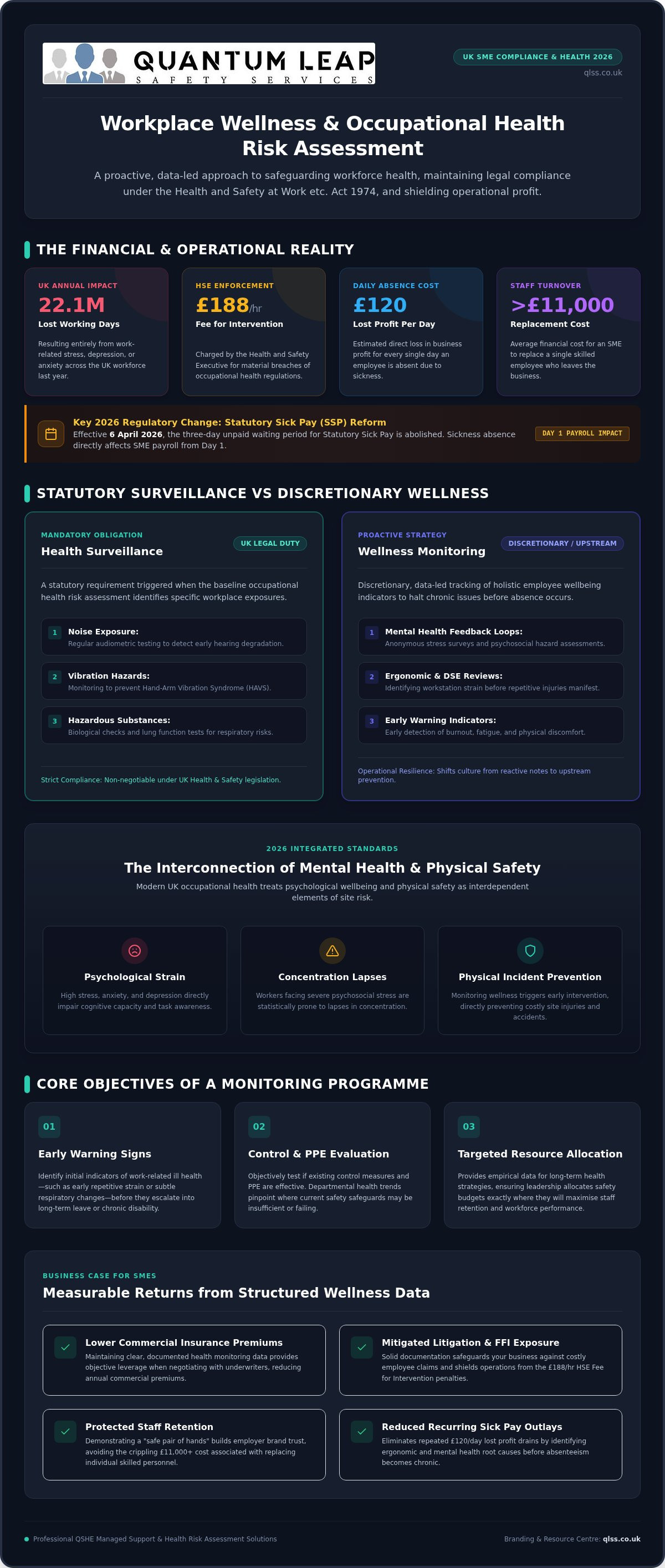
Did you know that work-related stress, depression, or anxiety accounted for 22.1 million lost working days across the UK last year? For a small or medium enterprise, this isn't just a statistic; it's a direct threat to your operational stability and profit. With the Health and Safety Executive charging a Fee for Intervention rate of £188 per hour for material breaches, failing to conduct a thorough occupational health risk assessment is a gamble most businesses simply can't afford to take.
We understand that the pressure to maintain a healthy workforce whilst staying compliant with the latest 2026 regulations often feels overwhelming. You're likely facing the dual challenges of high staff turnover and confusion over the difference between statutory health surveillance and general wellness monitoring. This guide promises to clear that confusion, helping you design a programme that reduces risk and improves employee health. We will walk through the essential steps to secure your documentation, lower insurance premiums, and foster a truly productive environment through a structured, data-driven approach to workplace wellness.
Table of Contents
Understanding Workplace Wellness Monitoring Programmes in 2026
Workplace wellness monitoring in 2026 represents a shift from anecdotal observation to the systematic, data-led collection of health information. For UK SMEs, this process involves tracking indicators that affect both physical safety and psychological wellbeing. It isn't merely a "nice to have" initiative; it's a pragmatic tool used to refine your occupational health risk assessment and protect your bottom line from the rising costs of statutory sick pay. By gathering objective data, businesses can identify trends before they manifest as chronic illness or workplace accidents.
The current regulatory environment requires an integrated approach. Modern standards no longer view mental health and physical safety as separate entities. Instead, they're treated as interconnected factors that influence overall site safety and productivity. A worker suffering from high stress levels is statistically more likely to experience a lapse in concentration, potentially leading to physical injury. By monitoring these elements together, businesses can create a more resilient operational framework that addresses the root causes of ill health.
The Core Objectives of Monitoring
Effective monitoring serves several primary functions that directly support business stability. First, it allows for the identification of early warning signs of work-related ill health, such as repetitive strain or respiratory changes, before they necessitate long-term leave. Second, it provides a method for evaluating the effectiveness of existing safety controls and PPE. If monitoring data shows a trend of health decline in a specific department, it indicates that current controls may be insufficient. Finally, this data provides the foundation for a long-term occupational health strategy, allowing management to allocate resources where they'll have the most significant impact on staff retention and performance.
Wellness vs. Health Surveillance
SME directors must understand that whilst wellness monitoring is often discretionary, workplace health surveillance is a statutory obligation when specific risks are present. If your occupational health risk assessment identifies exposure to hazards such as noise, vibration, or hazardous substances, systematic health checks are mandatory under UK law. Discretionary wellness monitoring, by contrast, focuses on broader health indicators like mental wellbeing and ergonomic comfort.
The 2026 landscape demands a shift from reactive "sick note" management to a proactive "upstream" model. This approach requires balancing the employer's duty of care with employee privacy. Data collection must be transparent, purposeful, and handled with strict confidentiality. When implemented correctly, an integrated monitoring programme ensures that you meet your legal obligations whilst fostering a culture of support that keeps your workforce healthy and engaged.
The Business Case: Why SMEs Need Proactive Monitoring
For a UK SME, the financial impact of employee ill health is no longer a delayed concern. The abolition of the three-day unpaid waiting period for Statutory Sick Pay (SSP) on 6 April 2026 means that sickness absence now impacts your payroll from the very first day. When you consider that every day of sickness costs an employer approximately £120 in lost profit, the argument for proactive monitoring becomes a matter of basic operational efficiency. A robust occupational health risk assessment identifies the triggers for these absences before they become a recurring drain on your resources.
Beyond immediate payroll costs, proactive monitoring strengthens your position in a competitive labour market. Staff retention is a significant challenge for smaller enterprises, where the average cost of replacing a single employee now exceeds £11,000. By demonstrating a "safe pair of hands" through consistent wellness checks, you improve your employer brand and reduce the likelihood of losing skilled workers to competitors. Additionally, maintaining clear, documented monitoring data allows for more transparent negotiations with underwriters, which can lead to lower commercial insurance premiums and a reduced risk of litigation.
Legal Obligations and Risk Assessments
Compliance with the Health and Safety at Work etc. Act 1974 requires more than just physical safeguards; it demands an active understanding of your workforce's health status. This data directly informs your occupational health services for SMEs, ensuring that interventions are targeted and effective. With the HSE Fee for Intervention (FFI) rate currently set at £188 per hour, failing to provide evidence of a thorough occupational health risk assessment during an inspection is a costly oversight. Employers should consult the HSE health surveillance guidance to determine which specific monitoring activities are mandatory for their sector. Integrating these systems through Business Total Compliance Solutions ensures you also meet the strict requirements for CHAS accreditation support for SMEs.
The Financial ROI of Wellness
Calculating the return on investment for wellness programmes requires looking at both direct savings and long-term stability. Whilst the cost of recruitment and training continues to rise, the expense of a structured monitoring programme remains relatively stable and predictable. Based on 2025-2026 UK workplace trends, businesses investing in proactive wellness programmes achieve an average return of £5 for every £1 spent through significant reductions in staff turnover and long-term sickness absence. This steady, methodical approach to health management ensures that your business remains resilient against the economic pressures of the modern market.
Key Components of an Effective Monitoring Programme
A successful monitoring strategy moves beyond generic perks and focuses on specific, measurable data points. By using your occupational health risk assessment as a blueprint, you can categorise monitoring into physical, environmental, and psychosocial pillars. This structured approach ensures that every piece of data collected has a direct impact on safety and operational performance, rather than becoming an administrative burden. Effective programmes are built on consistency, ensuring that health trends are identified early enough to allow for meaningful intervention.
Physical health monitoring should target the specific hazards identified in your risk assessment, such as vibration, noise, or repetitive strain. Environmental factors like air quality, lighting, and temperature must also be tracked, as poor conditions often lead to fatigue and reduced concentration. Adhering to the NICE workplace health management guidelines helps SMEs integrate these physical checks into a broader strategy that promotes overall employee wellbeing through evidence-based leadership. When these environmental and physical factors are monitored systematically, businesses see a marked reduction in the minor accidents that often lead to larger liability claims.
Lifestyle and wellness initiatives, whilst often discretionary, play a vital role in reducing long-term sickness. Supporting physical activity and nutritional health helps combat musculoskeletal disorders and cardiovascular issues. These programmes work best when they are structured and consistent, providing a steady stream of data to inform future health investments. Small changes in habits can significantly reduce the 7.1 million working days lost annually to musculoskeletal disorders in the UK.
Integrating Health Surveillance
Roles involving exposure to hazardous substances or high noise levels necessitate workplace health surveillance programs. It is essential to manage technical data from lung function tests, skin checks, and hearing assessments with precision. These results are not merely for record-keeping; they must be used to update your occupational health risk assessment immediately. When a monitoring result shows a decline in health, it triggers an immediate review of site controls to prevent further exposure and ensure total regulatory compliance.
Psychosocial Risk Monitoring
With more than half of all work-related illness now attributed to stress, depression, or anxiety, psychosocial monitoring is a commercial priority. Using anonymous surveys based on the HSE Management Standards allows you to identify "hidden" risks like excessive workload, poor workplace relationships, or lack of support. Establishing a feedback loop ensures that these insights lead to meaningful workplace adjustments. This process helps create a culture where employees feel safe sharing wellness data, knowing it will be used to improve their working environment rather than for disciplinary purposes.
How to Organise and Implement Your Programme
Implementing a structured wellness monitoring programme doesn't require a sprawling HR department. It requires a disciplined, five-step approach that integrates seamlessly with your existing safety protocols. The foundation of any successful initiative is a baseline occupational health risk assessment. This initial audit identifies which roles require statutory surveillance and which would benefit from discretionary wellness tracking. Once the risks are mapped, you can select specific KPIs, such as reduction in short-term absence or improved ergonomic feedback scores, to measure success.
Communication is the bridge between policy and practice. You must clearly explain the benefits to your workforce, emphasizing that monitoring is a tool for support rather than a method of surveillance. Launching a pilot programme in a single department is a pragmatic way to test your data collection methods. During this phase, you can apply the HSE "5 Rs" framework: Reach out, Recognise, Respond, Reflect, and Make it Routine. This allows you to refine the process based on real-world feedback before scaling the programme across the entire business. If you need support establishing these initial steps, contact us for a managed QSHE solution.
Data Privacy and GDPR Compliance
Handling sensitive health data requires strict adherence to GDPR standards to maintain employee trust. You must appoint a "competent person" to manage these wellness records, ensuring that individual results remain confidential and are stored securely. For high-level business reporting, use anonymised data that shows general trends without identifying specific individuals. This steady, methodical approach to data management protects the business from privacy breaches whilst providing the insights needed to update your occupational health risk assessment regularly.
Training and Internal Coordination
Managers play a pivotal role in the success of any health initiative. They require mandatory safety training coordination to ensure they can conduct health conversations and recognise early warning signs of burnout or physical strain. Staff also need clear instruction on how to use any new monitoring tools or apps effectively. Employee consultation serves as the most critical step in programme implementation because it builds the trust necessary for workers to engage honestly with monitoring tools. Without this collaborative foundation, even the most advanced technical systems will fail to produce reliable data.
Managed Solutions: Leveraging Professional QSHE Support
Managing the intricacies of a wellness programme in-house often proves technically demanding for small and medium enterprises. Many SMEs choose to outsource these functions to specialist consultants who act as a "safe pair of hands," providing the technical authority required to keep your occupational health risk assessment accurate and legally robust. This partnership ensures that health data is not just collected, but analysed and used to drive meaningful safety improvements across the organisation. It allows directors to focus on core operations whilst knowing their compliance obligations are being met with precision.
Investing in a managed QSHE service offers a level of long-term stability that internal resources often struggle to match. Professional consultants conduct regular audits that identify hidden risks and documentation gaps before they attract the attention of the Health and Safety Executive. For businesses aiming for growth, this support facilitates the transition from basic safety compliance to an ISO 45001-aligned management system, enhancing your reputation amongst clients and insurers alike. This integrated approach ensures that health and safety become a pillar of your business strategy rather than an administrative burden.
The Retainer Advantage for SMEs
A retainer model allows you to access "competent advice" without the prohibitive cost of a full-time safety officer. This arrangement provides regular programme reviews and documentation updates, ensuring your policies evolve alongside changing 2026 regulations. Having professional support during HSE inspections or accreditation audits offers significant peace of mind, as you can demonstrate a disciplined, methodical approach to health management. It turns compliance from a source of anxiety into a predictable, manageable business process that supports your long-term commercial goals.
Achieving Total Compliance
Achieving total compliance requires integrating wellness monitoring into your broader business objectives. Quantum Leap Safety Services specialises in supporting national UK businesses by designing bespoke programmes that reflect the specific hazards of their sector. Whether you operate in construction or renewable energy, we help you close the gap between policy and practice through a unified occupational health risk assessment framework. The next step for any business looking to enhance its occupational health strategy is to move from manual, fragmented checks to a professional, managed system that protects both your people and your profitability.
Securing Your Workforce for 2026 and Beyond
Effective workplace wellness monitoring is no longer a peripheral benefit. It's a core component of a resilient business strategy. By integrating these programmes into your occupational health risk assessment, you ensure that every health indicator tracked serves a clear purpose: reducing absenteeism and protecting your profit margins. We've explored how baseline audits, disciplined data management, and manager training create a robust framework that meets 2026 regulatory standards whilst fostering a supportive culture.
Quantum Leap Safety Services offers over a decade of SME compliance expertise, providing national UK coverage for all your health and safety requirements. Our pragmatic, cost-effective solutions for managed QSHE ensure your documentation remains audit-ready and your workforce stays productive. We act as a steady partner, helping you navigate complex legal duties with common-sense guidance that respects your resource constraints.
Book a consultation with Quantum Leap Safety Services to design your bespoke wellness monitoring programme today. Taking this step now builds the stability your enterprise needs to thrive in a changing economic landscape.
Frequently Asked Questions
Is workplace wellness monitoring a legal requirement in the UK?
Statutory health surveillance is legally mandated under specific regulations, such as COSHH, if your occupational health risk assessment identifies exposure to certain hazards. General wellness monitoring is not a strict statutory requirement in the same way; however, it supports your broader duty of care under the Health and Safety at Work etc. Act 1974. Most SMEs use it as a pragmatic tool to reduce absenteeism and demonstrate proactive risk management during HSE inspections.
What is the difference between health surveillance and wellness monitoring?
Health surveillance involves systematic health checks for employees exposed to specific risks, such as noise or hazardous substances, to detect early signs of work-related ill health. Wellness monitoring is a broader, often proactive approach focused on general wellbeing indicators like mental health, stress levels, and ergonomic comfort. Whilst surveillance is a legal necessity for high-risk roles, wellness monitoring is a strategic investment used to improve long-term productivity and staff retention.
How can a small business afford a wellness monitoring programme?
Small businesses can manage costs effectively by opting for a managed QSHE service on a retainer basis. This provides continuous access to professional advice and documentation without the prohibitive expense of a full-time safety officer. Focusing on high-impact, low-cost initiatives like anonymous stress surveys or ergonomic self-assessments also ensures a high return on investment. Preventing just one long-term sickness absence often covers the annual cost of a structured programme.
What kind of data can I legally collect from my employees?
You can legally collect health data that is necessary for fulfilling your legal obligations, such as results from mandatory hearing or lung function tests. For discretionary wellness monitoring, you should focus on anonymised data regarding stress levels, workload, or workstation comfort. All data collection must comply with GDPR standards, ensuring information is processed transparently, stored securely, and only used for the specific purpose of improving workplace health and safety.
How often should I review my workplace wellness monitoring results?
Results should be reviewed at least annually, or more frequently if your business undergoes significant changes in operations or staffing. Quarterly reviews of anonymised data allow for quicker interventions if negative health trends emerge in specific departments. Regular reviews ensure that your occupational health risk assessment remains a live document that accurately reflects the current status of your workforce, helping you stay ahead of potential compliance issues or productivity dips.
Can wellness monitoring help my business achieve CHAS or ISO certification?
Implementing a structured monitoring programme is a powerful way to demonstrate the effectiveness of your health and safety management system. It provides the objective evidence required for ISO 45001 certification and strengthens your application for CHAS accreditation. Auditors look for proactive data collection and evidence that results lead to meaningful improvements. Documenting these processes shows that your SME is committed to continuous improvement and total regulatory compliance.
What happens if an employee refuses to participate in monitoring?
If an employee refuses statutory health surveillance required by law, it becomes a health and safety management issue that may require formal consultation or disciplinary action. However, participation in discretionary wellness monitoring should be voluntary. You can encourage engagement by clearly communicating the benefits, such as personalised workstation adjustments or reduced stress. Building a culture of trust is essential to ensure employees understand that monitoring is a supportive measure designed for their benefit.
How do I link monitoring data back to my risk assessments?
Monitoring data should act as a feedback loop for your existing safety protocols. If results indicate a trend of physical strain or high stress in a particular area, you must update the relevant risk assessment to reflect these findings. This might involve introducing new controls, such as improved PPE, adjusted shift patterns, or upgraded equipment. Linking data in this way ensures your safety management remains evidence-based and responsive to the actual health needs of your team.


Comments